

Mustariha: Deepening Wounds and the Inauguration of a New Phase
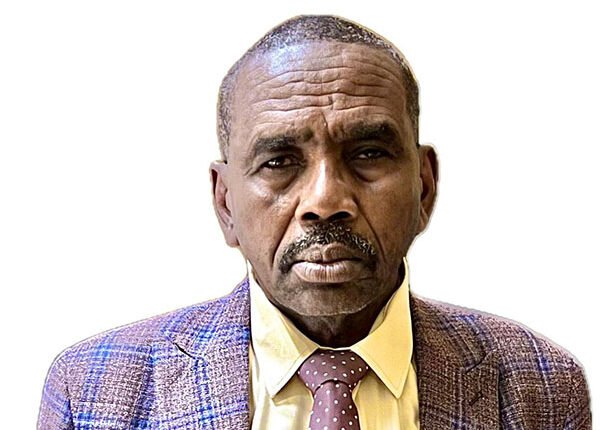
Ali Ahmed Daggash
The events witnessed in Mustariha, the damra of Mahamid leader Musa Hilal, on Sunday and Monday of last week must be viewed from multiple angles. They are not isolated incidents, but rather part of a series of carefully prepared arrangements, with currents now flowing towards an uncertain destination.
On Friday, 20 February, Hemedti appeared in Kampala wearing African attire laden with symbolism for those who read between the lines. He met with President Museveni — who presents himself as a standard-bearer of Pan-Africanism — speaking with him both privately and publicly, and reportedly concluding agreements.
In Uganda, Hemedti issued statements hostile to Saudi Arabia and, more broadly, to the Arab sphere. He declared his rejection of Arab initiatives and signalled a pivot towards Africa — consistent with the attire he wore in his public address (a Congolese-patterned outfit) and in his private meeting with Museveni (a white Congolese-style garment). It was as though he were conveying a message: we have come with modest goods — mobilise African mercenaries for us; we seek them, we will pay, and those for whom we act as proxies will also pay. From Colombia, he suggested, they had taken only drone specialists — “just ten”.
These developments, in my view, must be understood within a carefully constructed context — though, as heard in his speech, Hemedti once again strayed from the prepared script.
On the evening of Sunday, 22 February, a squadron of RSF drones attacked Mustariha, destroying the hospital and Musa Hilal’s guest house. On Monday, 23 February, the militia stormed the village in a violent ground assault. Musa Hilal survived, but his son Haider was killed along with more than forty of his supporters. Mustariha was looted and subjected to grave violations, from which even the women of the Abbala Mahamid were not spared. This escalation cannot be separated from what occurred in Kampala the preceding Friday.
Musa Hilal left Mustariha — now reduced to ruins — for an undisclosed location. It is unlikely to be neighbouring Chad, unless there have been unseen understandings. More plausibly, he may head towards Libya or to a secure location within Sudan to regroup and prepare for what appears to be an inevitable decisive confrontation.
By attacking Mustariha, Hemedti has created a new enemy — not only the Mahamid supporters of Musa Hilal, but potentially broader segments of the Abbala who may reassess their positions after the events in Mustariha, Babanusa, and the tightening pressure on figures such as Madibo and Mukhtar Babo Nimer.
Even Abdel Wahid al-Nur may find his already narrow space atop Jebel Marra becoming more constrained should pressure intensify. And to al-Hilu, the message concerns you as well.
Neutrality and abstention from the conflict are no longer viable options. Grey positions are no longer sustainable. Those standing with the militia — outside the Dagalo family — must reconsider their stances.
Some critics reproached Musa Hilal for remaining a bystander during the siege of El Fasher. He did not direct his forces to break the siege as the city cried out, nor did he cut off militia supply lines from Libya, despite declaring support for the army. Yet the present moment calls for sober reassessment.
To opinion leaders and decision-makers within the state, I say: the time has come to realign alliances. New policies are required to reflect changing realities. The militia can no longer plausibly claim to represent a revolution of the Abbala or an alliance of the marginalised. It has ceased to be a trusted vehicle even among some of its own components. It now appears as a leap by the Dagalo family into darkness — and this is a development that must be strategically understood and utilised.
If Hemedti once declared, “The killer of your father cannot be your brother,” then the number of those whose fathers have been killed by the militia grows daily. The Dagalo family is no longer a place of trust for many who currently remain within its ranks.
Mustariha will cause tremors within the militia’s own lines.
Wait and watch — I too am watching.
Shortlink: https://sudanhorizon.com/?p=11628