

Minawi to Egyptian Journalists: No State Can Force Sudan to Accept the Unacceptable — The UAE Is the One Rejecting Dialogue with Sudan
Cairo – Sudnhorizon – Sabah Moussa
The Governor of Darfur Region and Chairman of the Sudan Liberation Movement, Minni Arko Minawi, affirmed that ongoing military operations in Darfur and Kordofan are achieving their objectives with strength and precision, pointing to clear signs that the Rapid Support Forces (RSF) are entering a phase of decline and will retreat following their defeat in several border areas.
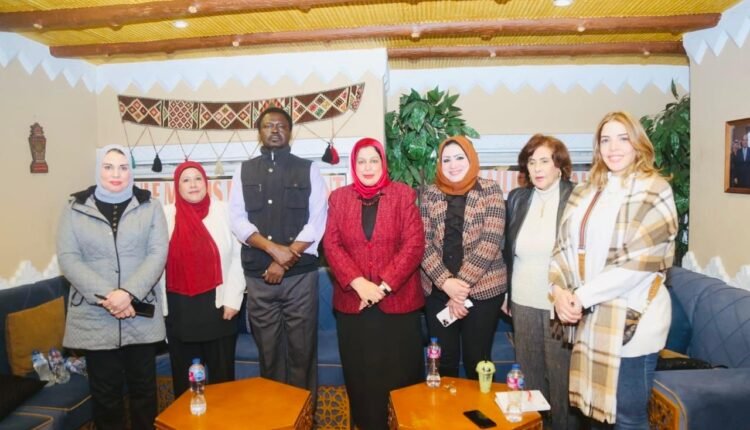
Speaking at a limited meeting in Cairo on Saturday evening with a number of Egyptian journalists specialising in Sudanese affairs, Minawi said that the militia is attempting to impose a siege in North and South Kordofan around the city of El-Obeid, and that efforts are underway to prevent this. He stressed that El-Fasher has not fallen, adding that it has in fact been devastated after the international community “ganged up” against it. He argued that Sudan is witnessing a “global war” within its borders, with the mechanisms and management of the war being entirely external, and said the situation in Sudan must be read in light of developments in Gaza, Somalia and Yemen. He emphasised that the conspiracy is vast, that complete escape from it is difficult, and that it will continue—underscoring the necessity of holding fast to national unity, the armed forces, and the government.
Minawi stated that the core principles in this conflict are the rejection of two states, two governments, or any armed forces other than the Sudanese Armed Forces. Any international pressure, he said, must not exceed these principles. He expressed confidence that facts on the ground would compel the United States to revise its position alongside the UAE, stressing that no country can force Sudan to accept what is unacceptable.
Responding to questions from Sudahorizon, Minawi said he does not recognise the “Quartet” and considers recognition of it an act of betrayal. He insisted that the UAE should have no role in mediation and that any paper issued by the Quartet that includes the UAE is unacceptable. He added that Sudan would accept a paper from the three countries—Egypt, Saudi Arabia and the United States—either jointly or from any of them individually. The UAE, he said, is a principal party to the conflict.
At the same time, Minawi underscored the importance of a bilateral dialogue with the UAE that addresses all concerns transparently and under public scrutiny. He called for direct talks between the Sudanese government and the UAE to discuss root causes, noting that just as the people fought alongside their army and government, they should be partners in any negotiations, with full transparency so they can know what is happening and monitor it. He rejected what he described as “shopfront dialogues,” insisting that any talks must be conducted with the knowledge of the people. Given that the government is unelected, he said, the public should not be surprised with secret talks or outcomes. He revealed that it is the UAE that refuses such dialogue with the Sudanese government.
Minawi added that any security-humanitarian operation must culminate in a comprehensive national constitutional dialogue driven by Sudanese will. He said any ceasefire—even for a single day—is unacceptable unless the militia withdraws or is removed from the cities it has occupied and is regrouped in camps outside urban areas. He welcomed the Prime Minister’s recent initiative announced before the UN Security Council, saying it reflects the general mood of the Sudanese street and is welcome for having been presented at an international forum.
He called for the inclusion of Islamists and any Sudanese citizen in dialogue, rejecting international pressure to fight Islamists or push the country toward internal conflict. He said claims of Islamist control of the army originate from the “Sumoud” group, noting that some of its leaders had commercial interests with the Bashir government until it fell. He accused Sumoud of echoing the UAE’s desire to exclude Islamists, adding that if this were the case, then Hemedti and the RSF’s top leadership are themselves Islamist cadres. He argued that this issue should be addressed through gradual reform, not destruction, noting that Islamists have become fragmented “tribes” rather than a single ideology as before.
Minawi explained that the government’s insistence on the RSF laying down arms, withdrawing from occupied cities, and relocating to camps outside urban areas stems from the fact that the RSF lacks political objectives or ethics, has committed crimes, destroyed Sudan, looted it, and continues to do so. Therefore, he said, it must be contained in specific locations to prevent repetition.
Regarding reports of dissolving the Sovereignty Council, Minawi said he has no information, adding that he would support such a move provided institutions such as a legislative council or even an appointed consultative council are established to prevent one-man rule.
On Egypt’s role in Sudan, Minawi said Egypt stood by Sudan at a difficult time, even as the UAE managed to sway much of the world to its side—leaving Egypt isolated as a result. He said Egypt understands the complexities of the Sudanese crisis well and has a clear position. He urged learning from the latent conflict that has surfaced in Yemen, saying Sudan had thought the UAE was an enemy only to Sudan, but it has emerged as an adversary to the entire region.
He noted that new alliances are forming—Egypt, Saudi Arabia and Turkey—amid early signs of threats to Red Sea security and in defence of shared interests against the UAE. He warned of preparations for a “rear-flank” attack in the Blue Nile, with arrangements underway in border areas with South Sudan and Ethiopia, as well as Kordofan, Darfur and the Libyan border. He claimed there is a plan to train RSF elements in Ethiopia, arguing that the RSF is a tool of a larger regional project extending to the Nile sources, and that it does not control when or where it fires its last bullet because it is in the grip of that broader project.
Minawi concluded that after this battle, new political forces with new ideas will emerge, saying the old forces have aged and are difficult to reunite. He warned against prolonged political vacuum and called for reform of institutions, including the armed forces—reform, not destruction. He stressed that reform and justice must proceed together through a lengthy procedural process, called for rejecting political parties founded on religion, and urged a comprehensive post-war political dialogue without excluding any party or group.
Shortlink: https://sudanhorizon.com/?p=10312