

Is It Time to Present an Islamic Contribution to the World Order?
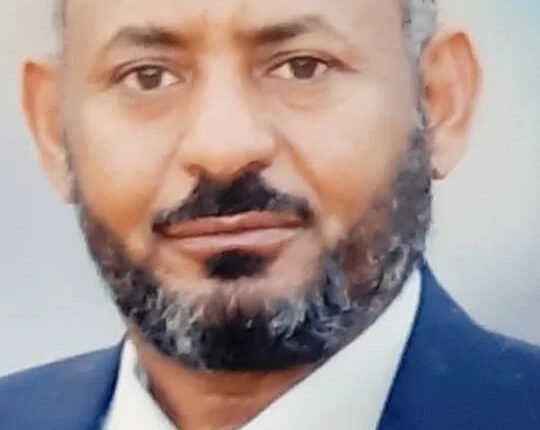
Al-Rafee’ Bashir Al-Shafee
I. A Civilisational Crossroads
Many observers—across cultures and belief systems—sense that the modern global order is experiencing deep strain. Political polarisation, widening inequality, ecological crisis, moral fragmentation, and technological disruption have exposed structural weaknesses in the systems that have governed the world for more than two centuries.
The modern international order largely emerged from the intellectual transformations that followed the French Revolution of 1789. That revolution marked a decisive shift toward secular, positivist governance, rejecting the claimed “divine right” of monarchs and elevating human reason as the primary source of political legitimacy. From that moment onward, both Western and Eastern societies embarked on an unprecedented experiment: constructing political, legal, and economic systems grounded in human philosophy rather than revealed religion.
That experiment continues today.
Yet as the world confronts mounting crises, an important question arises: Are current frameworks sufficient to address humanity’s moral and spiritual needs? Or has something essential been left behind?
II. The Secular Foundations of the Modern Order
Since the establishment of the United Nations in 1945–48, global governance has largely operated within two intellectual paradigms: Western liberal capitalism, built on secular democracy, market economics, and individual rights. Socialist and social-democratic models, historically shaped by Marxist thought and state-centred economic planning.
Despite their differences, both paradigms share a common foundation: they are products of secular, human-constructed philosophy. They derive legitimacy from human reasoning, historical experience, and political negotiation rather than from divine revelation.
International law, human rights charters, and global governance institutions have been built upon these frameworks. While these systems have achieved notable advances—particularly in science, medicine, and certain civil liberties—they have also generated profound contradictions:
• Persistent global inequality
• Economic systems that privilege financial concentration
• Political structures vulnerable to elite capture
• Cultural fragmentation and loss of shared moral grounding
For many Muslim societies, the adoption of these imported models has proven especially complex. Efforts to fully internalise Western liberalism or socialist governance have often clashed with deeply rooted religious and ethical traditions. Attempts at adaptation have sometimes required compromises that strained the moral fabric of those societies.
This tension invites reflection rather than confrontation.
III. The Question of Moral Foundations
The core issue is not whether modern systems have produced material progress—they undoubtedly have. The deeper question is whether they provide a sufficiently stable moral and spiritual foundation for human flourishing.
Material development without ethical coherence can produce imbalance. Technological advancement without moral restraint can magnify injustice. Economic growth without spiritual orientation can intensify alienation.
Across both East and West, many thinkers now speak of a moral vacuum—a loss of shared meaning, erosion of trust, and decline in transcendent purpose. Rising loneliness, political extremism, and cultural dislocation suggest that technical governance alone cannot sustain civilisational health.
If this diagnosis holds any truth, then the global conversation must expand beyond economic models and power blocs. It must include moral and spiritual frameworks capable of restoring balance.
IV. An Islamic Contribution — Not Confrontation
When speaking of an “Islamic solution,” it is essential to clarify what is meant.
This does not refer to narrow partisan interpretations or the political agendas of contemporary Islamist movements. Rather, it refers to Islam as a comprehensive moral and civilisational framework—one that integrates law, ethics, spirituality, economics, and governance within a unified vision.
Islam offers:
• A moral economy that balances wealth generation with social justice
• A conception of rights rooted in responsibility before God
• A view of governance accountable to divine ethical standards
• A framework that integrates material life with spiritual purpose
Such a vision need not be presented as a rival system seeking to displace others. Instead, it can be offered as a complementary contribution to global discourse—an ethical charter grounded in divine revelation but open to constructive engagement with existing institutions.
The goal would not be imposition, but participation.
Not confrontation, but contribution.
V. Justice, Mercy, and Human Dignity
The Qur’anic message describes Islam as a mercy to humanity:
“And We have not sent you except as a mercy to all mankind.” (Qur’an 34:28)
At its core, the Shariah seeks to preserve:
• Faith
• Life
• Intellect
• Property
• Family and lineage
• Human dignity
These objectives (maqāṣid al-sharīʿah) provide a principled moral architecture that transcends time and geography. In a world struggling with ethical relativism and material excess, such an architecture may offer renewed coherence.
This is not a claim that Muslim societies have fully embodied these principles in practice. History shows both achievement and failure. But the normative framework remains intact, offering a resource for renewal.
VI. A Universal Conversation
The enduring tension between secular ideologies and revealed religion has shaped much of modern political history. Yet framing the matter as a perpetual “clash” risks deepening division.
A more constructive path may lie in presenting Islam not as a rejection of modernity, but as a moral corrective within it.
The world today does not merely require new alliances or economic blocs. It requires a restoration of moral seriousness—virtue, justice, accountability, and spiritual depth.
Islam, in its universality, is not the possession of Muslims alone. It speaks to humanity at large. Its ethical vision invites reflection from anyone concerned with restoring balance between power and conscience, wealth and equity, freedom and responsibility.
VII. Conclusion: A Responsibility, Not a Reaction
Whether the world ultimately embraces an Islamic contribution is beyond our control. But presenting it thoughtfully, responsibly, and with intellectual rigour is an obligation.
If modern systems are showing signs of strain, the appropriate response is not denunciation, but offering an alternative vision rooted in justice and mercy.
The question is no longer whether global systems are facing a crisis. The question is whether we are prepared to articulate a morally coherent, spiritually grounded, and intellectually credible contribution to humanity’s future.
That may well be the task of our time.
Shortlink: https://sudanhorizon.com/?p=11304