

International Legal Expert: No Peace in Sudan Unless RSF is Completely Dismantled
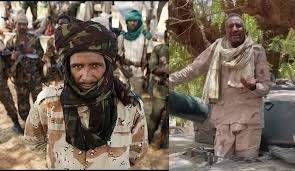
Sudanhorizon – Mohamed Osman Adam
The American legal magazine Jurist News has commissioned David M. Crane, founding Chief Prosecutor of the United Nations Special Court for Sierra Leone, to write an article highlighting the atrocities committed by the Rapid Support Forces (RSF) militia in Sudan. The article concludes that while a ceasefire and peaceful settlement are urgently needed, there can be no lasting solution in Sudan unless the RSF, as a parallel armed force, is fully dismantled and removed entirely from the Sudanese political and security landscape.
Crane argues that the international community’s response to Sudan’s devastating civil war has been marked more by rhetorical concern than by effective action. He contends that only a coordinated ceasefire, a unified African-led peace process, and genuine structural reforms can prevent further atrocities.
A distinguished scholar of international law, former senior US national security official, and prominent voice on the rule of law, state responsibility, and the legal limits of the use of force, Crane cites a paragraph from a report by the UN Office of the High Commissioner for Human Rights to illustrate how the global community has addressed the crisis.
According to Crane, Sudan’s paramilitary RSF launched a “wave of severe violence… shocking in its scope and brutality” during its recent assault on the city of El Fasher last October, as reported by the UN human rights office. He argues that such professional phrasing fails to capture the reality: a city starved, besieged, and then attacked with such ferocity that families fled through streets strewn with bodies. He stresses that this was not an isolated incident but the latest chapter in a campaign of atrocities that the world has chosen to witness rather than halt.
The article notes that for nearly two years, the RSF has relied on a consistent strategy to seize territory: siege, starvation, intimidation and forced displacement. Communities in Darfur, he writes, have endured killings at checkpoints, assaults on those attempting to flee, and the systematic use of sexual violence to fracture social bonds. Markets, clinics and water sources have been destroyed or confiscated, turning daily survival into negotiations with armed men. These, Crane argues, are not the excesses of undisciplined fighters but deliberate tactics designed to render civilian life impossible.
In an editorial report by Ingrid Burke Friedman, Executive Editor of Jurist, the magazine observes that despite the scale of suffering, the global response has amounted to a familiar mix of outrage and inertia. UN officials have issued increasingly urgent warnings, humanitarian organisations have appealed for access, and diplomats have expressed “grave concern”. Yet concern does not stop artillery fire, and statements do not open humanitarian corridors.
Multiple mediation tracks — regional, Western and Gulf-led — have produced meetings and communiqués but failed to generate sustained pressure capable of enforcing a ceasefire. Meanwhile, weapons and financial support continue to reach the warring parties, often with the tacit approval of states that publicly call for peace.
Crane further argues that perhaps the most troubling silence has been that of the African Union. The AU’s founding documents, he notes, commit it to act when mass atrocities threaten African populations. Sudan should have been a defining moment for the principle of “non-indifference”. Instead, he writes, the AU has remained on the sidelines, issuing statements and holding intermittent meetings without leading a unified diplomatic effort or establishing a credible accountability mechanism. In this vacuum, Sudanese civilians have been left without a continental institution prepared to enforce its own standards.
“The African Union’s silence,” Crane writes, “is the clearest example of a broader pattern: institutions created to prevent mass atrocities treating Sudan as someone else’s problem.”
He asks whether the world is prepared to do more than lament Sudan’s collapse and proposes a series of immediate and longer-term steps.
First, the killing must stop. A monitored ceasefire, backed by coordinated pressure from states with influence over armed groups, is essential. Humanitarian access must be guaranteed, with serious consequences for any commander who obstructs aid or targets civilians. Targeted sanctions should be imposed on individuals and networks facilitating atrocities — and enforced, not merely announced.
Second, Sudan needs a single peace process anchored in African leadership. Fragmented diplomacy has allowed armed actors to play mediators against one another. The African Union should lead a unified effort inclusive of all civilian constituencies, particularly those from Darfur. At the same time, an independent accountability mechanism — potentially a hybrid African Union–United Nations body — should be established to investigate and prosecute atrocity crimes committed by all parties.
Finally, Sudan’s long-term stability depends on dismantling the structures that made the war possible. The country cannot move forward while a powerful paramilitary force operates outside any national chain of command. Genuine security sector transformation — not cosmetic reform — must be part of any political settlement. The future political order, Crane argues, must also address the deep marginalisation of peripheral regions that has fuelled cycles of violence for decades.
The UN’s description of the El Fasher massacre as “shocking in its scope and brutality” is accurate, he concludes. What should shock the world even more is how predictable it was — and how preventable it remains. Sudanese civilians are not asking the world to resolve their political disputes for them; they are asking for the chance to survive long enough to rebuild their country. That is not an excessive demand. The question, Crane writes, is whether those with the power to act are willing to do so.
Shortlink: https://sudanhorizon.com/?p=11559