

International Conference on the War in Sudan Concludes Session
Port Sudan –Sudanhorizon
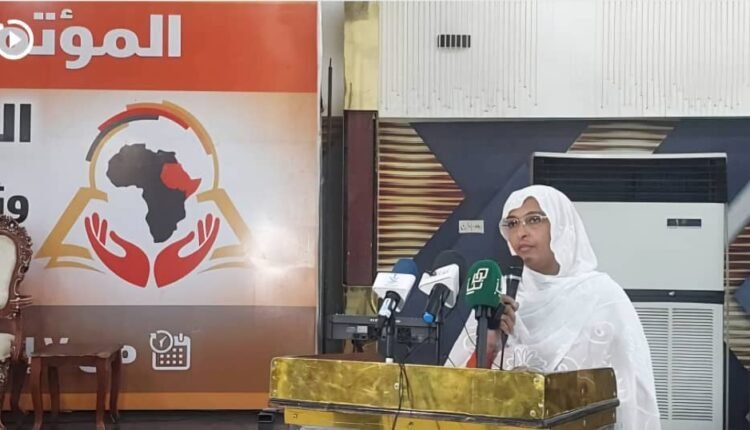
The First International Conference on “The War in Sudan and its Impact on Security and Stability in the Horn of Africa,” organized by the Horn of Africa Studies and Research Center, on Tuesday concluded today sessions in Port Sudan. The conference was held from December 7-9 at the Al-Shamandoura Hall in Port Sudan.
Dr. Fatima Al-Aqib, Secretary-General of the Horn of Africa Studies and Research Center, stated in the closing statement and recommendations that the conference witnessed the presentation of approximately 60 research papers over the three days, addressing all the themes outlined in the conference’s preamble.
Al-Aqib emphasized that the proposals and recommendations were categorized into several themes, focusing on the root causes of the crisis and its repercussions.
In the area of political reform and governance, the most prominent recommendations included the need to draft a comprehensive and permanent constitution that manages diversity, building the state on the foundations of good governance, emphasizing the equitable distribution of power and wealth to address marginalization, establishing commissions to contribute to a safe democratic transition, strengthening institutions responsible for resource management and combating corruption, achieving a comprehensive political settlement to reach national consensus, initiating a Sudanese-Sudanese dialogue for a civilian-democratic transition, and restructuring the relationship between the state and society.
In the area of security and military reform, the conference recommended the necessity of building a unified, professional national army, initiating comprehensive and phased procedures to collect weapons from citizens and armed groups, and establishing a transitional justice system.
Regarding the area of economic development, sustainability, and reconstruction, the recommendations included holding an academic conference on stability and sustainable development in Sudan, adopting economic policies that safeguard Sudan’s resources and historical rights from the encroachment of other countries, supporting and empowering the private sector, activating the role of agricultural colleges, and rebuilding and reconstructing the destroyed infrastructure.
In the social, service, and reconciliation sphere, the conference recommendations emphasized the need to combat hate speech, promote a culture of peaceful expression, disseminate a culture of fighting corruption, strengthen the national role through the Ministry of Education and integrate national education into school curricula, enhance the protection of women and children, and combat violence against women.
In the media sphere, the conference recommended developing media legislation and laws to keep pace with the digital age, activating the role of the Information Technology Court, training and qualifying state leaders in positive media discourse, raising awareness of national issues and social cohesion, reducing reliance on online activists, and utilizing information technology and artificial intelligence.
Regarding international and regional cooperation, the conference recommended the importance of the government addressing foreign interference with a clear strategy, developing a roadmap for future strategic relations, focusing on and developing inter-state relations among the countries of the Horn of Africa, working with the African Union to support efforts to end the war, strengthening international and regional cooperation on Red Sea security, enhancing border control and finding satisfactory solutions to border issues and demarcation, and limiting the role of international and regional organizations with foreign agendas.
Shortlink: https://sudanhorizon.com/?p=9429