

Independence Day with a Different Flavour
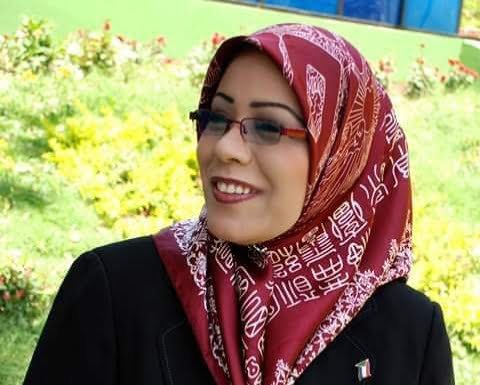
Dr Inas Mohamed Ahmed
The first of January each year is an enduring day in our nation’s history and dear to the hearts of all Sudanese. Wishing everyone well-being and safety; may our country enjoy security, stability, and prosperity as we mark the 70th anniversary of our glorious independence. With it, we welcome a new calendar year—may God make it a year of goodness and growth for our country, of victory and honour for our armed forces, and of unity of purpose and ranks for a proud people whose resolve does not waver and whose determination does not falter.
Another bitter and painful year of war has passed—a war that has turned our country into an open theatre for crimes, violations, and suffering, and has exposed the weakness of international mechanisms to stop it or to deter the rebellious militia. The systematic killing of civilians, mass killings amounting to genocide, the burning of victims’ bodies, looting, rape, enforced disappearances, abductions, arbitrary detention, and the deliberate destruction of infrastructure—hospitals, schools, universities, markets, airports, power stations, water facilities, and other civilian assets—are all war crimes and crimes against humanity that have stripped away the last fig leaf concealing the frailty of the international community.
Despite the clarity of the tragedy and the awareness of major powers of the scale of the catastrophe—before it even unfolded—hesitation and extreme sluggishness were the defining features of the international community’s response to the violations and crimes committed against the Sudanese people. This, in itself, constitutes a moral crime.
Internationally, the Security Council issued a number of resolutions aimed at halting violence and hostilities and holding those responsible to account. Yet on the ground, non-implementation and the blatant disregard of these resolutions—particularly by the terrorist militia—have been the dominant reality shaping events.
Although Security Council resolutions coincided with unfolding events, in practical terms, they arrived far too late. They failed to protect civilians from systematic killing, to save children from dying of hunger, or to stop the rape and abduction of women.
The Security Council, whose purpose and core mandate are to safeguard international peace and security, is constrained by the veto power of five states—used first, second, and tenth to protect their own interests, and only thereafter, if at all, to protect international peace and security—again, according to those same interests.
Some observers view the war in Sudan as the gravest test of capability the international community has faced. What occurred demanded immense capacity, swift action, and effective solutions to resolve the crisis. Instead, capacities were limited, procedures paralysed, solutions improvised and slow—and the result was zero.
Anyone who follows international resolutions will find that, on paper, they comply with international law, the UN Charter, and international treaties. In reality, however, they are issued in accordance with international balances of power. This has led some to conclude that there was complicity—amounting to an unspoken intent—in what transpired. The massacres committed in El Fasher were anticipated, and warnings were issued before they occurred, yet there was insufficient attention or genuine engagement to prevent them. Weapons, equipment, and mercenaries were brought in from several countries, through multiple airports, in broad daylight before the eyes of the world. A rogue state supported and financed these actions, and the international community knew this and knew what it was doing, yet chose to turn a blind eye in shameful silence. When massacres occurred, innocent blood was spilled, bodies were burned, and the number of victims rose—only then did the international community issue its feeble statements of condemnation and denunciation.
What has happened compels us to re-examine many concepts in international law—foremost among them the notion of maintaining international peace and security: how is it maintained, and from whom? As well as the concept of civilian protection, international justice, and other such terms.
As for the most significant developments of 2025, one stands out clearly: the shift in the United States’ position on the war in Sudan. This was among the most important tactical changes to influence public opinion and shift the balance of international power. It clarified the distinction in dealing with the armed forces—as the legitimate national institution committed to international laws and treaties and supported by the people—and a barbaric, brutal, rebellious militia that neither respects international decisions nor hesitates to commit crimes and atrocities, spreading terror and destruction wherever it operates. Here, institutional discipline in engagement became evident, with each party placed in its proper position. The United States moved towards direct engagement with the Sudanese government and the armed forces as the legitimate authority of the state, without the need for a Quartet whose members’ interests conflicted, for intermediaries pursuing other states’ ambitions by proxy, or for organisations pursuing unclear agendas far removed from genuine solutions. This confirms that any solution must come through cooperation with the state’s national institutions and in line with its national plan—because they are the owners of the crisis and therefore have the foremost stake in resolving it.
On the African front, according to the International Committee of the Red Cross, Africa is home to 50 armed conflicts—around 40 per cent of all armed conflicts worldwide—and as a result accounts for 70 per cent of the items on the Security Council’s active agenda that require decisive action. Among them is the war in Sudan. For example, on 30 October 2025, Security Council members issued a press statement expressing grave concern over the escalation of violence in El Fasher and discussed the effectiveness of Resolution 2736 (2024), which demanded that the militia lift the siege of El Fasher and called for de-escalation. The militia did not comply, confident that international interests intersect with the inertia of Security Council decisions. The scope of massacres widened, and atrocities increased, yet no urgent decision or direct UN intervention was taken to halt them. Instead, slowness and cold reactions prevailed. El Fasher did not fall—but international justice and the very concept of humanity did.
Throughout 2025, Sudan endured immense suffering from the war and its painful repercussions. It faced abandonment in international positions, weak UN engagement, and a grey diplomatic neutrality from many. Yet domestically, it witnessed great victories by its valiant armed forces, the return of significant numbers of internally displaced persons and refugees to the warmth of the homeland, and the beginning of recovery—by God’s grace, through the determination of an army that knows no defeat and a people that knows no surrender. Thus, the celebrations of independence on its seventieth anniversary will, God willing, carry the taste of victory.
Shortlink: https://sudanhorizon.com/?p=10059