

Guinea-Bissau… A Coup or a Handing Over of Power?
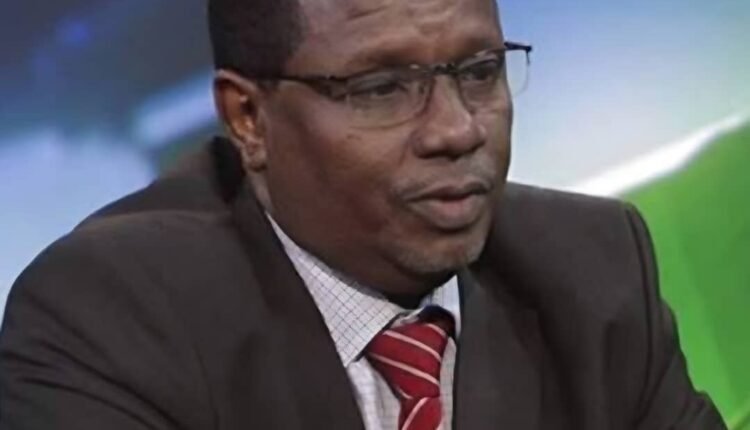
Ambassador Atta Al-Manan Bakhit
When the ballot boxes closed on Sunday evening, everyone awaited the decision of the Electoral Commission—scheduled for Thursday, 27 November—to learn who would become the next President of the Republic of Guinea-Bissau. Outgoing President Umaro Sissoco Embaló and his ruling party were preparing for a grand celebration, while the young opposition leader Fernando Dias and his broad coalition were poised to pre-emptively announce their victory even before the Commission released its results.
But on Wednesday morning, events took a dramatic turn. The army—led by General Horta N’Tam and a group of senior officers—abruptly ended the country’s fragile democratic experience, seizing power by force of arms.
Guinea-Bissau lies in the far west of Africa, a small state of roughly two million people bordered by Senegal and Guinea-Conakry. Although both neighbours are French-speaking, the official language in Guinea-Bissau is Portuguese, inherited from the former colonial power, Portugal, which dominated the territory from the eighteenth century and ruled both Guinea-Bissau and Cape Verde—the only two Portuguese-speaking countries in West Africa.
In the 1950s, a unified resistance movement arose demanding independence for both Guinea-Bissau and Cape Verde, led by the historic African revolutionary Amílcar Cabral. Portugal assassinated him in 1973, but his assassination fuelled a popular uprising that ultimately led to Guinea-Bissau’s independence in 1974.
Despite its modest size, Guinea-Bissau has endured a turbulent political history marked by military coups, armed confrontations, and civil wars—experiences that have severely hindered its development compared with its neighbours. Since independence, the country has witnessed five successful military coups and countless failed attempts, the most recent in 2022. For this reason, last Wednesday’s coup did not shock the local public, who received it with noticeable indifference. This stands in stark contrast to the strong reaction expressed by regional and continental organisations such as the African Union and ECOWAS.
What is unusual about this coup, however, is the narrative promoted by the opposition and echoed by some analysts: namely, that what happened was not a typical military takeover but a deliberate handover of power orchestrated between outgoing President Umaro Embaló and his close ally, General Horta N’Tam, the commander of the army’s land forces.
The opposition claims that Embaló resorted to this “handover” once he realised—based on preliminary electoral results—that Fernando Dias had indeed won. The army’s intervention occurred one day before the expected announcement of the results. The coup leaders’ first decisions included dissolving the Electoral Commission, arresting its members, and confiscating ballot boxes.
Given the long-standing and intimate relationship between Embaló and General Horta N’Tam, the opposition’s claims carry significant weight. For instance, the coup leader is a relative of Embaló, and their friendship dates back to Embaló’s early days in the military, when N’Tam was his direct instructor—teaching him both the theory and practice of military science.
Their relationship deepened further: after Embaló won the 2019 presidential election, he appointed N’Tam as head of the Presidential Guard—making him the chief protector of the president—then later promoted him to the rank of General and put him in charge of the land forces.
In 2022, when an attempted coup targeted Embaló, it was N’Tam who deployed his troops, thwarted the plot, and saved his friend’s presidency—cementing their bond even further.
Embaló’s influence on N’Tam was equally profound. In 2019, the general converted to Islam under Embaló’s direct influence, and the two men performed the Hajj pilgrimage together in 2020. All of this strengthens the argument that what happened in Guinea-Bissau may be closer to a “handover of power” than to a classic military coup—especially since Embaló himself was the first to announce the coup in a phone call to AFP, claiming he was under army supervision. Yet the very next day, Senegal announced that Embaló had arrived safely in Dakar aboard a military aircraft.
Whatever the truth, the events in Guinea-Bissau are deeply regrettable. They have extinguished a fragile democratic experiment that many hoped would grow despite the risks. It was expected that Embaló would accept the verdict of the ballot box just as his predecessor, Domingos Pereira, accepted his defeat in the 2019 elections and peacefully handed over power to Embaló. But this did not occur.
And if the opposition’s assertions prove true—that the “coup” was in fact a coordinated transfer of power intended to reset the political landscape before Embaló’s possible return—then the deposed president, known for his opportunism, may yet emerge as the greatest loser. For the allure of power is stronger than friendship—no matter how deep—and history is rife with examples that are too numerous to count.
Shortlink: https://sudanhorizon.com/?p=9144