

From Damascus to Khartoum: Lessons in Dismantling Paramilitaries and Restoring the State
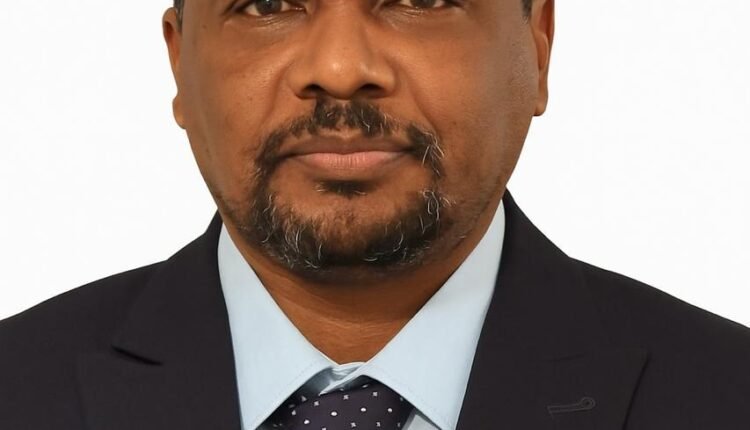
Brigadier (Police, Ret.)
Omar Mohammed Othman
The historic agreement between Syria’s transitional government and the Syrian Democratic Forces (SDF), signed yesterday (Sunday) by Syrian President Ahmed Al-Sharaa, represents a unique political and military model for dismantling parallel entities without sliding into comprehensive security chaos.
When applied to the Sudanese context, this model offers a realistic roadmap for dealing with the terrorist rebel Rapid Support Forces militia—not through fragile political settlements, but by restoring the centrality of the state militarily, economically, and administratively.
Individual Integration and the Dismantling of Rigid Structures
The core of the Syrian model’s success lies in the principle of individual integration, precisely what Sudan needs today to dismantle the Rapid Support Forces militia and rebuild the army on a single national doctrine.
Ending Structural Autonomy
Just as the SDF agreed to dissolve its structures and integrate its members as individuals into the military institution, any agreement in Sudan must be built on the dissolution of the Rapid Support Forces as an independent entity. Integration does not mean a partnership between two armies, but rather the absorption of technically and ethically qualified individuals into the body of the Sudanese Armed Forces under the banner of the nation.
Screening and Vetting
The Syrian agreement relied on rigorous security vetting of incoming personnel. Sudan must apply the same approach—excluding those involved in violations and crimes against civilians, while accepting “non-implicated” individuals on an individual basis. This breaks loyalty to tribe or commander in favour of loyalty to the nation.
Disarmament of Heavy and Advanced Weaponry
Heavy weapons and drones must be transferred immediately to the control of the armed forces, just as the Syrian agreement stipulated that all military capabilities fall under the authority of the Ministry of Defence—thereby guaranteeing the state’s monopoly over armed force.
Nationalising Resources and Cutting Financial Lifelines
Control over oil in eastern Syria was key to restoring the state’s economic sovereignty. By analogy, gold and border crossings in Sudan represent parallel economic lifelines.
Reclaiming Sovereignty over Gold
Applying the Syrian provision on the “handover of oil fields” to gold mines in Darfur and Jebel Amer would be a decisive step towards genuine peace. Sustainable stability cannot be achieved while a militia retains a budget parallel to that of the state.
Dismantling the Financial Empire
Just as service institutions were merged in Syria, Sudan can nationalise the commercial companies affiliated with the Rapid Support Forces militia and redirect their assets towards rebuilding what the war has destroyed.
Recognition in Exchange for Submission
The Syrian government granted recognition of cultural rights in exchange for full loyalty to the state. Sudan could pursue a similar approach that restores social integration without entrenching militia loyalties.
Local Representation, Not Militia Representation
The people of regions previously under militia control (such as Darfur and Kordofan) should be granted an inherent right to local administration and political representation at the centre—but as Sudanese citizens, not as representatives of a militia. This would cut off narratives that exploit “marginalisation” to justify rebellion.
Territorial Unity and Central Sovereignty
There must be no space for “self-administration” zones outside Khartoum’s authority. All border crossings and customs points must be handed over to regular forces—police and army—thereby definitively ending the phenomenon of a “state within a state”.
Conclusion: Sovereignty Is Not Granted—It Is Reclaimed
Drawing lessons from the Syrian model does not mean blind replication, but rather learning from a successful experience in restoring state centrality and authority. Only conscious military and political will can transform peace from a “temporary truce” into “sustainable stability” that protects Sudan from fragmentation and transnational militias.
The success of an “integration and sovereignty” model in Sudan depends on clarity of vision, firmness of will, and a deep conviction that sovereignty is not granted—it is reclaimed.
Shortlink: https://sudanhorizon.com/?p=10564