

Civilisations That Rose and Fell
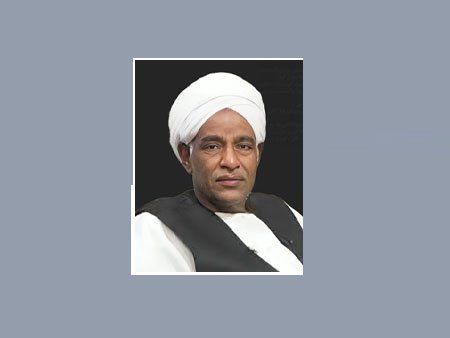
Mahjoub Fadl Badri
We can say, with complete confidence, that the United Nations—born in San Francisco, United States, on 24 October 1945—has failed dismally and achieved a grand zero in the following areas:
Maintaining international peace and security.
Preventing wars and settling disputes by peaceful means.
Promoting human rights.
Supporting development and international cooperation.
Respecting the sovereignty of states.
These are the five principles which its five founders claimed they sought to realise through the international organisation known as the United Nations.
Mr U Thant himself expressed his disappointment at the General Assembly’s failure to achieve any of its declared objectives, as well as at the Security Council—hamstrung by five ready-made vetoes capable of overturning any decision that does not suit the mood or interests of the five permanent members. He famously explained his decision not to seek a second term as UN Secretary-General by saying: “He who wears a tight shoe knows where it pinches.” In other words, what is called the United Nations is, quite simply (with apologies), a “tight shoe”.
This was in 1971, after U Thant had spent ten years as Secretary-General, succeeding Mr Dag Hammarskjöld, who died in the suspicious crash of his aircraft in the forests of the Congo in 1961. Since then, calls to reform the international organisation have grown—without result.
The matter lay in the hands of the great powers, particularly the United States of America, which forced everyone to wear this “tight shoe” until it, too, grew weary of it. It then decided to replace the UN Security Council with an “International Peace Council” chaired for life by Donald Trump—who had resigned himself to the Nobel Peace Prize coming to him, trailing its robes, for it was fit for none but him, and he was fit for none but it. Were anyone else to seek it, the earth itself would quake—at least from Trump’s point of view, not that of Abu al-Atahiya. And thus it goes.
Before our very eyes, a new organisation is now taking shape—one that will not wait for the United Nations to be escorted to its final resting place. Perhaps the condolences will not even end with the burial rites; perhaps its remains will be placed, face uncovered, in a glass coffin as a lesson for those who come after.
We once thought—out of ignorance—that the United Nations was a sanctuary for the world and a source of security. Instead, it has proven to be an idol that neither benefits—indeed, may even harm—nor responds to our words. A state such as the usurping entity can stick out its tongue at all UN resolutions, except for one third of the second clause of Resolution 181 on the partition of Palestine: 55 per cent for the Jewish minority, 45 per cent for the Arab majority of the people of Palestine, and the “internationalisation” of Jerusalem and Bethlehem.
The speech delivered by the Prime Minister of Canada at this year’s Davos Economic Forum amounted to a coup de grâce for the global order—a system that Trump was striving to skin while it was still alive and twitching. Thus ended the tragic farce, or the “lie”, in which the world had been living, as described by Mark Carney, the Prime Minister of Canada—a seasoned economist—who openly stated what others merely whisper: that the United Nations is dead, that it was a lie, or a civilisation that rose and then fell.
For this reason, I have borrowed the title from the famous section of Al-Arabi magazine, “Civilisations That Rose and Fell”, back when Dr Ahmed Zaki edited it.
“And do not invoke with Allah another deity. There is no deity except Him. Everything will perish except His Face. His is the judgement, and to Him you will be returned.”
Shortlink: https://sudanhorizon.com/?p=10737