

The Post-political Era in Sudan (1)
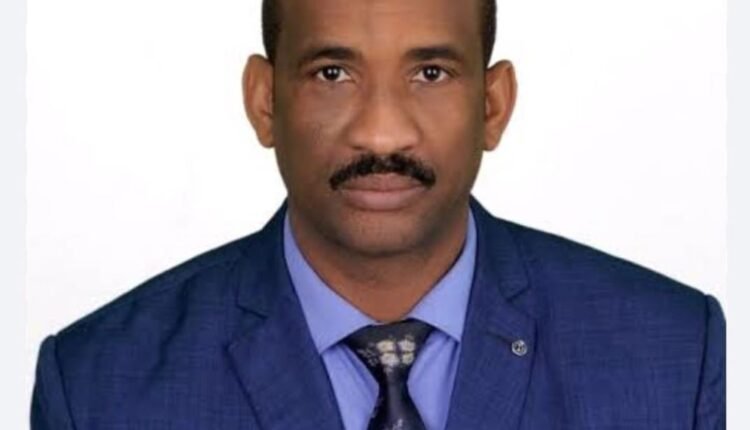
Dr Yasser Yousif Ibrahim
This article proceeds from a firm premise: political parties are essential in the process of nation-building. Yet our parties today are unable to fulfil that vital role for various reasons. Their weakness has contributed to the militarisation of politics, strengthened traditional communal formations with political expression, and opened space for small groups—limited in number but immense in impact—to emerge through alliances with foreign actors against the country.
Since the dawn of independence, and for a long period thereafter, Sudanese political parties of all ideological orientations were the most prominent feature of the national scene. Despite organisational weaknesses and limited tangible achievements, they remained a pillar of national cohesion. They provided a space in which Sudanese gathered around unifying ideas, a vessel for national aspirations, and a step towards completing the project of nation-building on foundations that transcended narrow loyalties rooted in tribe and region.
Sudanese parties emerged amid the great ideological struggles that followed the Second World War, when colonised peoples intensified demands for independence and liberation. That period also witnessed the “great schism”—to borrow ecclesiastical language—between capitalism and socialism, which cast its shadow across the developing world. In this context, Sudan’s political parties were born as the country awaited independence.
The political arena took shape around two broad types: the traditional parties (Umma and Unionist) and the modern ideological parties (the Communists, Islamists, and Arab Ba’athists). Throughout successive periods of national rule, a significant portion of political life revolved around these parties—even when they were outside power during military regimes. In the public consciousness, they remained the appropriate mechanism for articulating national issues and the preferred vehicle for free political competition.
More importantly, they were seen as instruments of national unity: civilian formations transcending tribal and regional affiliations, nurturing ideas that upheld national cohesion, the modern state, and—crucially—the principle that the state must monopolise force and arms. Even when disagreements arose, these parties maintained the premise that armed formations outside the national army were unacceptable.
However, a careful observer of Sudan’s political development will note that parties no longer command the same level of public support. They have also lost much of their influence over educated elites. Three alarming consequences have followed: the resurgence of communal and tribal organisations filling the vacuum left by party politics; the complete militarisation of politics, such that access to political office has become tied to possession of armed force; and the rise of small but highly dangerous groups aligned with foreign agendas against the country’s future.
These developments threaten national unity and delay the construction of a civil sphere—an essential condition for sound national renewal. While the current wartime reality demands prudence and sober engagement with pressing challenges, it does not absolve leaders of the responsibility to devise balanced structural remedies that preserve national cohesion behind a legitimate position supportive of the army, while simultaneously addressing the deeper political dysfunction.
The pressing question is: how did we reach this alarming point?
A pivotal moment was the convergence of political parties with the Sudan People’s Liberation Movement in the 1995 Asmara Declaration. That alignment broke with a longstanding norm in Sudanese politics that distinguished between political opposition and taking up arms against the state or seeking foreign backing. At the time, the opposition did not fully grasp the gravity of legitimising armed struggle. In the context of its battle with the Salvation government, it opened the door to the unthinkable—normalising external intervention and diminishing the national army’s moral standing.
The second critical development was the outbreak of war in Darfur and the proliferation of armed movements that effectively “rotated weapons” from one group to another. Major movements retained their forces and failed to implement meaningful integration programmes—a failure in which government authorities bear responsibility.
Because parties prioritised short-term calculations over strategic thinking, they failed to recognise that the rise of heavily armed regional movements would erode their popular base and draw away the historical support they had long enjoyed as legitimate representatives of the people across towns and rural areas. Meanwhile, the prolonged dominance of military regimes stunted the natural institutional growth of parties and destabilised their organisational structures.
Today, Sudan’s predicament is that politics has become hostage to the logic of armed force, regional influence, or foreign patronage. Unless these structures are dismantled through dialogue and consensus, their consequence will be further wars and chronic instability. Sudanese must engage in a national dialogue grounded in sound political principles that place all citizens on equal footing in rights and duties, and that clearly define institutional roles in a manner consistent with our supreme national interests.
Has reality overtaken the parties? Does the technological revolution—expanding awareness among the youth—require new mechanisms for representing public will?
In my view, a strong state—an indispensable condition for renaissance—requires strong and stable institutions. Just as it needs a well-equipped army supported and respected by its people, it also needs national political parties capable of articulating public concerns. These parties must practise internal democracy before demanding it in competitive politics. In a country like Sudan, where the state itself remains in formation, it is imperative that such parties be national in programme and composition—embracing the full spectrum of Sudan’s intellectual and ethnic diversity.
Shortlink: https://sudanhorizon.com/?p=11208