

Between Al-Dabba and El Fasher
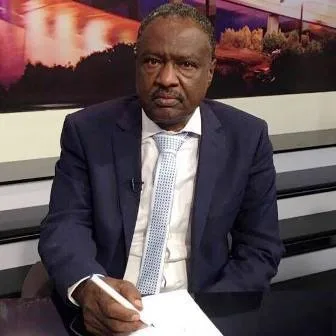
By Rashid Abdel Rahim
A relative of mine from Buri Al-Mahas once told me about his father, a merchant who travelled widely across Sudan in the days when journeys were long and arduous. He would spend years in each region, often marrying locally to protect himself from loneliness and uncertainty. When he moved on, he would divorce his wife, leaving her with enough to live on, and his children would be honoured, provided for, and housed.
My relative said his father would, on every trip, search the local lists — housing registries, school admissions, any public records — hoping to find a brother or relative’s name. Often, he did. In fact, the last city where he discovered a brother was El Fasher.
The editor under whom we trained in journalism had once worked in the El Fasher prison service before joining the press. He spoke of his time there with pride, remembering the city’s people fondly and the friendships that bound him to them.
The late Dr Tadros Samaan, a renowned obstetrician and gynaecologist, also spoke warmly of his early medical years in El Fasher, recalling it with nostalgia and deep affection.
All these people who were, in one way or another, connected to El Fasher surely now have loved ones among those displaced to Al-Dabba, in northern Sudan.
El Fasher — A Symbol of Unity
El Fasher is the capital of Darfur, home to people from across Sudan — those who came for work, for trade, or for opportunity. It has always been a melting pot of cultures, a school of coexistence and unity, embodying the very fabric of Sudanese identity.
Historically, El Fasher, like Timbuktu in Mali, was a centre of Islamic scholarship and learning, a pillar of faith in the region, and home to the caravan that carried pilgrims to the Holy House of God.
Today, this ancient city’s people, unable to flee, are in the grip of those devoid of mercy, men who have forgotten what it means to be Sudanese.
Those who managed to escape are now in Al-Dabba, embraced by their fellow citizens in the north — welcomed not just onto their land, but into their homes and hearts. People have rushed to provide food, shelter, and comfort; fires were not even needed, for meals awaited them as guests of kin.
They have not needed — nor will they need — international aid. Sudan’s own people have sufficed for one another.
A Message to the Quartet
El Fasher and Al-Dabba together send a message to the so-called Quartet — the international actors mediating over Sudan:
Those who slaughtered El Fasher’s civilians are not a people with whom Sudan can coexist. They are killers and blood-spillers, and no external pressure will convince the Sudanese to share their homeland with them.
El Fasher and Al-Dabba declare that Sudan is one body — united and resilient. Its people stand by one another, seek refuge in one another, and remain bound by a common destiny. The only outliers are the treacherous militias that betrayed the nation.
Sudan, strong in its unity and faith, will resolve this war on its own terms, ensuring that peace across its land is safeguarded by its own strength, not by foreign-brokered truces with those who know neither covenant nor honour.
Shortlink: https://sudanhorizon.com/?p=8703