

Aviation Martyrs (3-3)
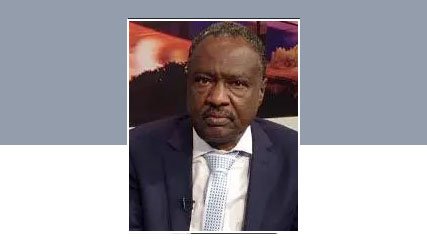
A quiet, humble, and sharp-witted man, a man of asceticism and integrity, possessed of indescribable courage. He was unknown to the Sudanese public, despite the fact that some of the most significant breakthroughs in the peace process were achieved through his efforts. This was Engineer Musa Sayed Ahmed.
His first official meeting with Dr. John Garang, leader of the SPLM, took place at his home in Nairobi. The first session began with a question from the colonel: “I don’t know you, and I’m unaware of any official government position you hold.” Musa replied, “I am tasked with communicating with you, and I have the authority to reach an agreement with you. I will abide by and implement whatever we agree upon.”
Several meetings followed, and the tension subsided, leading to meetings being held at night when there were fewer visitors.
The preliminary meeting with Dr. Riek Machar, which culminated in the peace agreement, involved Musa Sayed Ahmed.
The meeting took place in a middle location between the SPLM and government positions, under the shade of a tree.
Musa began the meeting by telling Riek, “You are an engineer, and I am an engineer, and we both know that a straight line is the shortest distance between two points. Therefore, I will tell you clearly what I want from you, and I expect the same clarity from you.”
Musa Sayed Ahmed concluded several agreements with groups that had broken away from the SPLM. In one of these meetings, the group leader specified the route Musa was to take to reach their camp.
The route began with a helicopter landing point, followed by a three-hour walk, after which a car would take Musa and his delegation to the camp.
The negotiation session began in the afternoon and extended into the evening. Musa felt that the commander wasn’t paying full attention and was frequently leaving the meeting. He asked the accompanying intelligence officer, who informed him that a football match between Al-Hilal and Al-Merreikh was aired live and that the commander was watching it and going outside to listen to the game. The officer advised Musa to postpone the meeting until nearly midnight, after which returning was impossible, especially since the plane that brought them didn’t fly in the dark.
Upon their return to the armed forces camp, they found people extremely worried, fearing something terrible had happened.
When the time and place for the signing of the Khartoum Peace Agreement were set for the Presidential Palace after sunset, as a responsible for the media I had to reject the scheduled time for the signing ceremony. In lieu I proposed it be held in the afternoon to allow media outlets have clear shots. Musa faced a difficult task in changing the timing.
We prepared halls in the Palace furnishing them with telephones and we arranged with several channels to contact the leaders after the signing to record their statements. The coverage was extensive and rapid.
At the start of the signing ceremony, it was decided that the signatory on behalf of the government would be the Secretary-General of the High Council for Peace, Mohamed Al-Amin Khalifa. However, the organizers were surprised when Dr. Riek Machar refused to sign with him, saying, “I don’t know him, and I haven’t agreed with him on anything. The person I agreed with is Musa Sayed Ahmed, and he is the one I will sign with.” And so it was.
Among the good tidings of that momentous day, as the doves of peace were released, a white dove landed on the head of Dr. Riek Machar.
Musa, the quiet man, continued in his usual manner, unsung amidst the many achievements for which he was the primary architect. He was one of the martyrs of peace in the plane crash that killed Brigadier General Al-Zubair Mohamed Saleh in Nasir.
A short life filled with giving. May God accept him among the righteous and bless his descendants and his widow, Ms. Tawassul.
Shortlink: https://sudanhorizon.com/?p=11041