

An Organisation for the Martyrs: A National Duty to Preserve Dignity and Legacy
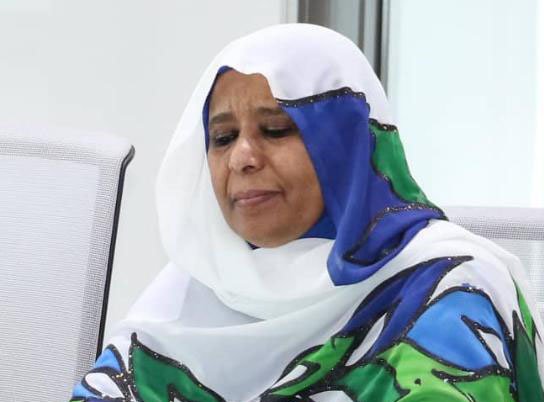
Dr Salwa Hassan Siddig
I cannot remember a time when Sudanese society was in greater need of an organised body to care for the families of martyrs than it is today.
In the past, such care was largely associated with the families of members of the armed forces and security institutions. Today, however, this accursed war has expanded the meaning of martyrdom across countless groups and under many banners. Yet all those who have fallen share one defining truth: they gave their lives for the country and its people.
Glory be to the One who changes conditions.
Over the past seven lean years, Sudan has moved from relative stability to overwhelming hardship. Even before the outbreak of war, the seeds of decline had been sown. Malicious hands disrupted the delicate balance of our institutions, striking at our prosperity, our productivity, and the serenity that once characterised everyday life. Faces that once shone with dignity and confidence have withered under the strain of conflict.
The war did not merely destroy infrastructure — it impoverished society at its roots.
I remember a friend who used to collect charitable donations from Sudanese communities in Europe and distribute them discreetly to orphaned children back home. She would ask for properly documented cases, then pass them to groups abroad who supported families quietly, without publicity, seeking only reward from God.
Recently, I asked her how they were coping after the war.
Her answer was simple and devastating: the scale has become unbearable. The number of families in need, scattered across every corner of Sudan, has exceeded their capacity. The war has left almost no household untouched.
This reality makes one thing clear: reactivating and updating the law governing an Organisation for the Martyrs is no longer optional — it is a necessity imposed by circumstance.
Care must extend to all martyrs without discrimination — whether they were members of the regular forces, volunteer fighters, or civilians treacherously killed while defending their lives, homes, and honour. Martyrdom is not a matter of affiliation. It is a matter of sacrifice.
Sudanese society has already demonstrated extraordinary solidarity. Voluntary initiatives have emerged across the country. Almost every morning one finds oneself added to yet another “Balsam” group — an initiative seeking to soothe the wounds of bereaved families. Praise be to God, the people have not failed their own. Generosity is woven into the Sudanese character. If we were charitable in times of peace, how much more so in a time of national trial?
Yet goodwill alone is not enough.
Voluntary work, especially in a field so painful and expansive, requires coordination. It needs structure, documentation, and sustainability. It needs someone to gather scattered efforts, unify resources, and transform compassion into a long-term institutional framework capable of generating sustainable support for the most vulnerable.
The number of affected families is far greater than we can comfortably imagine. Precisely for that reason, state intervention becomes a duty — not a luxury, and not a political choice.
This undertaking demands comprehensive documentation using modern tools. It requires coordinated action across social, administrative, and security dimensions. When the state assumes responsibility, support becomes a recognised right — not a favour, not charity, and not an act of benevolence.
The family of a martyr does not receive charity. It holds a claim.
It is a father who gave his son — a piece of his own heart — so that the nation might stand. It is a mother who surrendered her comfort so that the homeland might endure.
For that reason, we repeat:
Let the state gather the dispersed ideas.
Let it consolidate scattered funds.
Let it channel various streams of support into one purposeful institution — an Organisation for the Martyrs — whose foremost mission is to safeguard the dignity of those who gave everything.
This is not an impossible task.
Technology today has simplified documentation, registration, verification, geographic mapping, and digital disbursement. With transparent platforms and structured oversight, such an organisation can function efficiently and fairly. What is required is sincere intention and decisive leadership.
And despite all its cruelty, this war has revealed something powerful about the Sudanese people. We have seen families share their last morsel of food. We have seen citizens give of their wealth, their resilience, their honour, and their faith.
We have learned once again that nations are preserved by values — not by force alone.
Were it not for the moral foundations rooted in our faith, such sacrifice would not have been possible.
Praise be to God for His blessings, and may the legacy of goodness endure.
“The sponsor of an orphan and I will be in Paradise like this,” said the Prophet (peace be upon him), holding his index and middle fingers together.
May God accept the martyrs.
And may this blessed month of Ramadan bring healing and renewal to us all.
Shortlink: https://sudanhorizon.com/?p=11426