

An Arrow from the Land of Kinānah (Egypt)
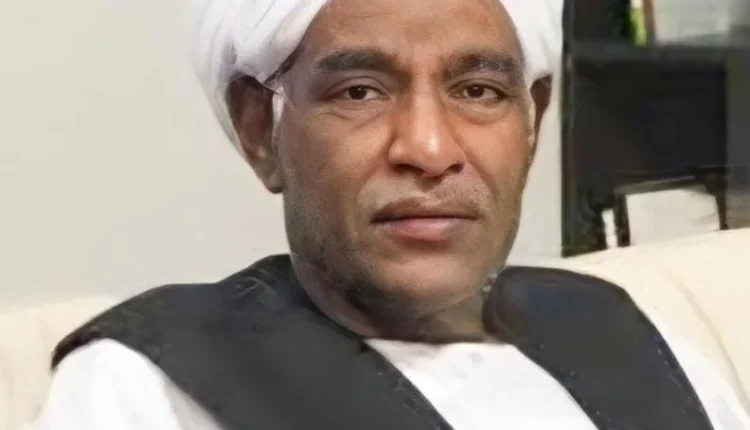
Mahjoub Fadl Badri
My testimony is inevitably biased when it comes to Dr. Abdel-Ati Al-Mana‘i—Egyptian by birth and upbringing, Sudanese in affection and inclination. Love for Sudan varies among Egyptians, but Upper Egyptians surpass them all. My relationship with Dr Abdel-Ati—the Qenawi Sa‘idi Al-Mana‘i—would be diminished if described merely as friendship; he is a brother my mother did not give birth to.
Sufficient proof of Dr Abdel-Ati’s love for Sudan is that he remained in the heart of the battles of Khartoum from the first treacherous bullet on 15 April for more than two months, before leaving to Madani and then to Port Sudan. He documented his testimony in his book Sudan: War and Ashes – My Testimony to an Age of Collapse, published by Injaz Publishing and Distribution.
Today, I dedicate this space to an important message written by the pen of the physician-litterateur, calligrapher, artist, and humane soul, Abdel-Ati, under the title “An Important Line”, in which he wrote:
From time to time, the voices of some pseudo-philosophers rise, calling for the return of Egypt’s guests to their countries, as though Egypt has grown too small for its people and its guests alike—forgetting what President Abdel Fattah el-Sisi repeatedly says when he describes them as “Egypt’s guests.” This phrase reveals the authenticity of the Egyptian people, who, for decades, have opened their doors to every newcomer and have honoured those who came seeking refuge or lawful sustenance. Egypt—through which caravans of prophets and nations have passed—will, God willing, remain a land of peace and safety, aptly captured in the divine meaning of the verse about the abode of eternal reassurance: “Enter it in peace and security” (Al-Hijr: 46). It is a divine message that entry into places of purity is under the canopy of peace and security—two meanings most strongly associated with Egypt in the collective consciousness of the region’s peoples.
Those who promote such calls justify their sick idea by claiming that “our guests” burden the economy and compete with citizens for livelihoods—claims refuted by realities on the ground before any numbers in tables.
The experience of our Syrian brothers alone suffices as a rebuttal. We learned from them—and from their brilliant skills in the arts of trade, in which they are masters despite all objections and with history’s testimony—that they injected new spirit into the markets of food, clothing, perfumes, and sweets, invigorating commerce overall by creating jobs and raising standards of quality and competitiveness. Their economic presence became a positive mark, not a negative one.
Those who you imagine restrict your freedoms or harm your economy were a support to Egypt in its hardest years—Libya, Sudan, Yemen, Iraq, Syria, and other countries that never withheld support from Cairo in moments of hardship. They were soldiers in the glorious October War; their treasuries were open to arm Egypt’s army; and their lands were a refuge for our military academy when the enemy struck. Here I mean Sudan in particular, whose land hosted men and equipment until Egypt passed through the bottleneck to its deserved victory.
Whoever today incites against the guests of great, generous Egypt—ancient by its history, not by the likes of these aggrieved agitators—only muddies clear waters with ignorance and by turning away from a recent history whose ink has not yet dried.
I say it as President el-Sisi says it: welcome, dear guests—ḥabbābakum in Sudanese; marḥabā bikum in Libyan; yā ahlan wa sahlan in Levantine accents—and in every language: you are welcome.
The legitimate question remains: what if the entire world adopted your idea and sent all Egyptians working abroad back to their homeland at once? How many billions of dollars would Egypt then lose from the remittances its sons inject annually into the arteries of the national economy—supporting families and developing society?
Those who today call for expelling guests forget that many Egyptians themselves are “guests,” honoured in other countries, earning their livelihood with dignity and returning that good to their motherland.
An Important Line:
Fear God, and know that days and nights alternate; whoever rejoices in a time may be saddened by times to come. Whoever believes his strength or position is permanent has misunderstood the laws of history.
May God preserve Egypt—land and people—and return you to reason safely, before you awaken to a reality that shows no mercy to those who set fire to the body of their homeland while thinking they are protecting it.
May God bless the pen of Dr Al-Mana‘i, who offered sincere counsel to his brothers, fulfilled the duty owed to his country and to ours, and chose from his quiver a true arrow—sent from the Land of Kinānah (Egypt)—to strike those “pseudo-philosophers” at the mark. We ask God to accept it from him, to grant victory to our army and our people, to return our absent ones, and to have mercy on our martyrs. He is All-Hearing, All-Able, and the One who answers prayers.
Shortlink: https://sudanhorizon.com/?p=10326