

America Between Arrete and Al-Burhan
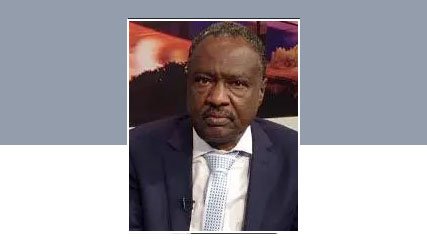
Rashid Abdelrahim
The United States has failed to force Sudan to declare a 90-day truce, and has therefore resorted to exploiting the international organisation, the United Nations, by withholding an entry visa from President Abdel Fattah al-Burhan and preventing him from addressing the world through UN sessions.
US envoy Massad Boulos has continued to pursue Sudan with repeated statements calling for a three-month truce, and each time his demands have met with disappointment and failure.
This allows Sudan to move beyond the current American position by taking firm decisions that would end the personal ambitions of Adviser Massad Boulos and those working behind the scenes on his behalf.
Such decisions should strike at the heart of America’s attempts to pressure Sudan and make it understand that relations are meaningless unless they serve the interests of both peoples and both countries.
They should also teach the United States that strength can reside in a developing nation that is confident and proud of its principled positions, and that does not fear the sceptre of power wielded by weak men who have mounted the back of a country that was once powerful.
A world not possessed by those who claim to possess it,
whose richest people are its poor masters.
President al-Burhan’s message from the UN platform can be delivered by Sudan’s representative at the international organisation, whether the Prime Minister or someone else, and whether at this session or a subsequent one.
A strong position is needed to end what the author describes as American bullying, which he believes has aligned itself with the rebellion and is seeking to protect it from an increasingly apparent defeat.
The United States has exploited the fact that the UN headquarters is located on its territory and has employed various methods to prevent participants from attending. According to the author, this began with Yasser Arafat in 1998, when the organisation was forced to move its sessions to its European headquarters in Geneva. Such incidents, he argues, have continued, including efforts to prevent South Sudan’s negotiating delegation from participating in forthcoming sessions.
Washington’s conduct, the article argues, has deteriorated from pursuing international political figures at the UN headquarters to pursuing participants in the Football World Cup. Last June, it allegedly prevented Somali referee Omar Abdulkadir Arrete from travelling, depriving him of his first opportunity to participate in the World Cup.
The United States has repeatedly violated the 1947 Headquarters Agreement.
And if its justification regarding Yasser Arafat was that the Palestine Liberation Organisation was a terrorist organisation, then, the author asks, what justification could there be for its treatment of a football referee?
The United Nations has become an organisation that has been tamed and stripped of its teeth. It no longer possesses a meaningful voice or influence in the world and has been reduced to little more than a forum for speeches without tangible effect.
America cannot accuse al-Burhan of terrorism while, the author argues, the world bears witness to the terrorism of the Rapid Support Forces and sees peace prevailing in areas controlled by the Sudanese Armed Forces. Yet, he concludes, America remains blind to this reality and, despite its power and greatness, has chosen to submit to a businessman-president blinded by his love of money, offering his country’s material and moral strength for sale in the international slave market.
Shortlink: https://sudanhorizon.com/?p=18312