

Alumni of the International University of Africa: Always Present
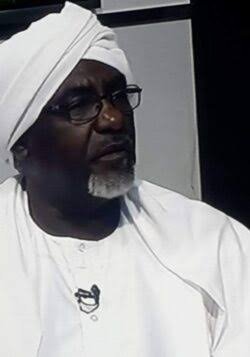
Dr Osman Abu Zid
I can think of no better introduction to this article than a brief reference to a forthcoming book being written by our colleague, Professor Mohamed Al-Sayyid, entitled: The Future of Education Between the Challenges of Artificial Intelligence and the Constraints of the Attention Economy.
But what is the relevance?
The relevance lies in the fact that we are witnessing today profound transformations in the structure of education under the influence of automation and artificial intelligence, while facing a crisis of presence, attention, and fragmented awareness — precisely the issues explored in the book. A new form of colonisation is emerging, one that seeks, through digital mechanisms of control, to dominate human consciousness and steer behaviour and thought. The book proposes, among other things, the revival of authentic education and the restoration of attention through the Islamic tradition of radical attention: remembrance (dhikr), vigilance, gathered intention, silence, and contemplation.
The fruits of this authentic education are visible in the graduates of the International University of Africa, with countless examples and stories that offer lessons for those of understanding.
Stories of Dedication and Journeys of Knowledge
I once spoke with the President of the Supreme Islamic Council in a West African country — a graduate of the International University of Africa. I asked him how he reached the University and whether he had been admitted on a scholarship. He replied:
“Many young people in our country, upon completing secondary school, would travel overland to Sudan. But unfortunately, when the war in Darfur began, these journeys stopped. Travelling by air from our country to any Arab or African state is extremely expensive, because you must first fly to a European country before heading to your intended destination.”
I still recall that in the early 1970s, young Somali men walked the entire distance from Mogadishu to Omdurman to enrol at Omdurman Islamic University!
Since its founding in 1966 — first as an institute, then as an Islamic centre, before maturing into the International University of Africa — this institution has been a home for seekers of knowledge from across the African continent and beyond. Its graduates today occupy some of the highest positions in their home countries, and the University regularly hosts distinguished alumni at its Board of Trustees meetings, usually held in early January each year.
The Maasai King and the Myth That Was Broken
Some years ago, during one such meeting in Khartoum, we met the King of the Maasai people. He had come to Sudan distressed because rumours were circulating that dozens of Maasai boys and girls admitted to the University had disappeared, never to return — and that they were, quite simply, going to be eaten!
Yes — that is exactly what he said. Some people had spread the bizarre myth that Muslims eat children. The King added with sarcasm:
“I came here only to find the young men and women in excellent condition, studying rare and valuable specialities in medicine, engineering, and the sciences. The University provides them with full care, food, and accommodation. We shall send you many more of our children for you to ‘eat’ — may it be good and wholesome!”
A Graduate in Addis Ababa — and Minnesota
Just before writing this article, I watched a video of a large festival in Addis Ababa that had invited one of the University’s medical graduates, Afeef Mohamed Taj, to help open the event. Dr Mohamed Taj Al-Arusi told me that Afeef’s presence had a major impact on the festival’s success.
Afeef is an excellent Qur’an reciter. When he travelled to Minnesota to lead prayers at the Tawfiq Centre Mosque in Minneapolis, people came from different states — even from Canada — to pray behind him. The community in Minnesota raised funds to purchase a house in Addis Ababa as a gift for him. Dr Al-Arusi added:
“This young man is one of the ripe fruits of the International University of Africa. We ask Allah that the University return to its former glory — and better.”
An American University Seeking Affiliation with a Sudanese One
In 2013, while visiting a newly established Islamic university in the United States, its director asked that the institution be granted affiliation with the International University of Africa. We were astonished — an American university seeking affiliation with a university based in Sudan! Remarkable indeed.
Many newly founded Islamic universities in Africa — now numbering more than 55 universities and colleges — have found cooperation and academic understanding with the International University of Africa. Among them are Abdallah bin Yasin and Mohamed Al-Amin Al-Shanqiti Universities in Nouakchott; Al-Imar in Guinea; King Faisal University in N’Djamena; the Islamic University in Niger; Ummah University in Kenya; Al-Sumait in Zanzibar; Al-Furqan in Côte d’Ivoire; Imam Al-Bukhari; and others such as Imam Al-Shafi‘i College in the Comoros, Doha College in Mauritius, and Al-Awwaliyya in Ethiopia.
All these institutions have adopted Arabic as an official teaching language, with no fewer than 172,000 male and female students enrolled.
Why the International University of Africa Stands Out
There is no doubt that the University’s educational system — which keeps students closely connected to the campus environment while also opening them to Sudanese society — profoundly shapes their intellectual, emotional, linguistic, and spiritual growth.
The University attracts distinguished academics in administration and teaching. Its Board of Trustees includes members from the Gulf and African states who have contributed considerably to its progress.
For these merits, the University won the prestigious King Faisal Prize for Service to Islam in 2019. The award citation highlighted the University’s role in serving Islam, teaching its principles, promoting the Arabic language in Africa, hosting and educating tens of thousands of students, reinforcing Islamic and Arab identity through conferences and seminars promoting the values of Islam, moderation, and balance, expanding its knowledge outreach through media, establishing scientific colleges in various regions worldwide, founding specialist centres for da‘wah, community development, research, and African scripts in Qur’anic orthography, along with a faculty dedicated to disaster management and refugee studies, and building the largest Islamic library in African languages.
A Salute — and a Look Ahead
Greetings to the International University of Africa as it prepares for this year’s Board of Trustees meetings. Among the accompanying programmes is an important international conference titled:
“The Role of Universities in Post-War and Post-Crisis Reconstruction”
organised in cooperation with the Association of Islamic Universities, from 6 to 8 January. The University will also inaugurate a comprehensive documentation of its institutional journey.
Shortlink: https://sudanhorizon.com/?p=9768