

A Just and Fair Peace… Beyond the Sudanese Government’s Statement
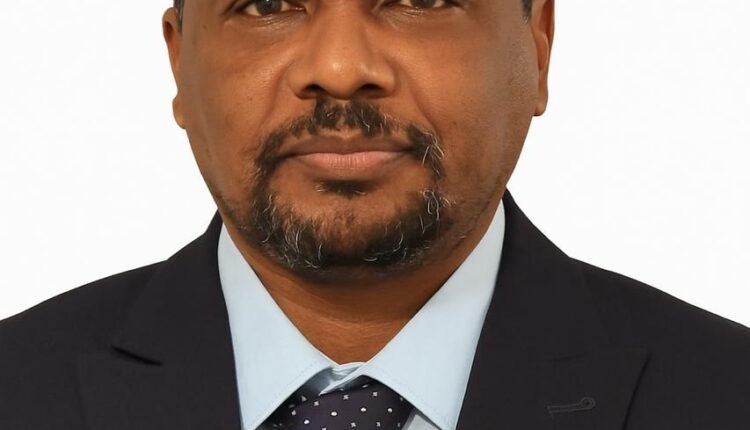
Brigadier of Police (Rtd.)
Omar Mohammed Othman
Amid this war that has exhausted Sudan, drained its energies, and left its people displaced, uprooted, or waiting in uncertainty, the Sudanese Government issued a statement on 19 November 2025, welcoming the efforts of the Kingdom of Saudi Arabia and the United States to bring about peace, and affirming its readiness to engage seriously in any endeavour that stops the bloodshed.
But what truly drew attention was a precise phrase in the statement: “a just and fair peace.”
A short expression on the surface — yet one that encapsulates the entire position and places all matters in their proper context.
Since the war began, initiatives have multiplied and proposals have varied, but most of them have moved towards placing the state and the militia on equal footing, or blurring the distinction between aggressor and victim. This statement therefore, came to say clearly: we are for peace — but not any peace.
A peace built on truth, not on appeasement; on the authority of the state, not on sharing it.
A “just peace” is one that restores the state’s dignity, safeguards the army’s standing, and rejects any settlement that rewards those who attacked the homeland.
Needless to say, we are not advocates of war, nor do we desire its continuation. War benefits no one, nor does it please anyone. But the question has always been: what kind of peace are we seeking?
The Sovereignty Council’s statement settles this debate with its clear phrase: “a just and fair peace.”
The position has not changed — it has simply become more explicit and resolute, stripped of any ambiguity or equivocation.
As for the word “fair”, it carries a profound human and moral dimension. No peace can endure if it ignores the victims or erases their rights. Fairness means justice for the nation first; justice for its army, which stood firm; justice for its displaced people; and justice for its women and children who bore the cost of war through no fault of their own.
Fair peace is not built on forgetfulness, but on recognition — and on the courage to confront the truth.
In international law, it is said that “true peace can only be born from the womb of justice,” for justice is not a political luxury, but a prerequisite for building a state worthy of life. From this perspective, the phrase in the statement serves as a safeguard for the national position against any attempt to impose a settlement that overlooks the essence of justice or grants legitimacy to rebellion.
It is also worth recalling that the Arab Republic of Egypt and the Kingdom of Saudi Arabia have consistently affirmed their support for Sudan’s unity, sovereignty, and national institutions since the war began — a position that inherently distinguishes between the state and the militia. It reflects a deep Arab understanding that Sudan’s stability can only be achieved through its legitimate institutions, not through those who rose against them by force of arms.
Thus, the expression “a just and fair peace” is not a mere diplomatic flourish, but a national vision that expresses the philosophy of the state for the coming phase. Sudan does not reject peace — it rejects an incomplete peace that equates the victim with the perpetrator.
It calls for peace built on justice and fairness, and for rebuilding the homeland on the firm foundations of law and dignity.
When peace is coupled with justice, it transforms from a signature on paper into a unifying national project — from a temporary truce into the beginning of a new path towards the Sudan we all aspire to.
Shortlink: https://sudanhorizon.com/?p=8893